How each system actually works
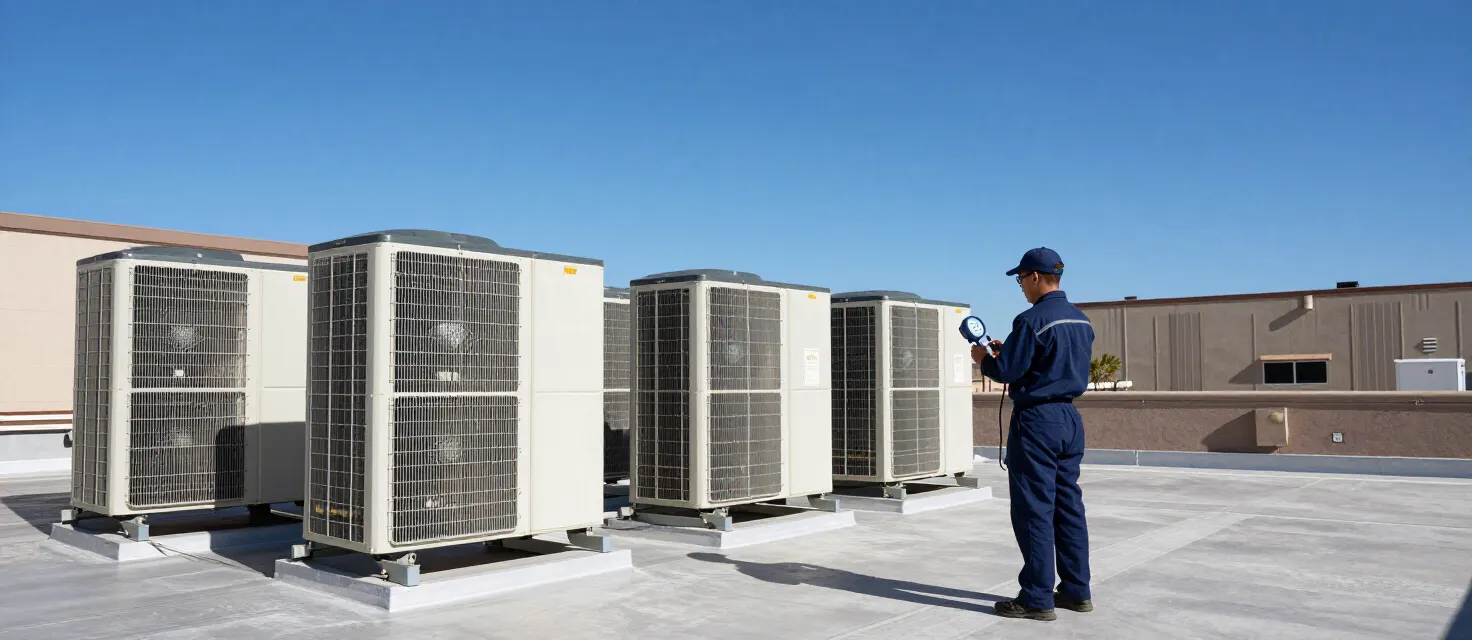
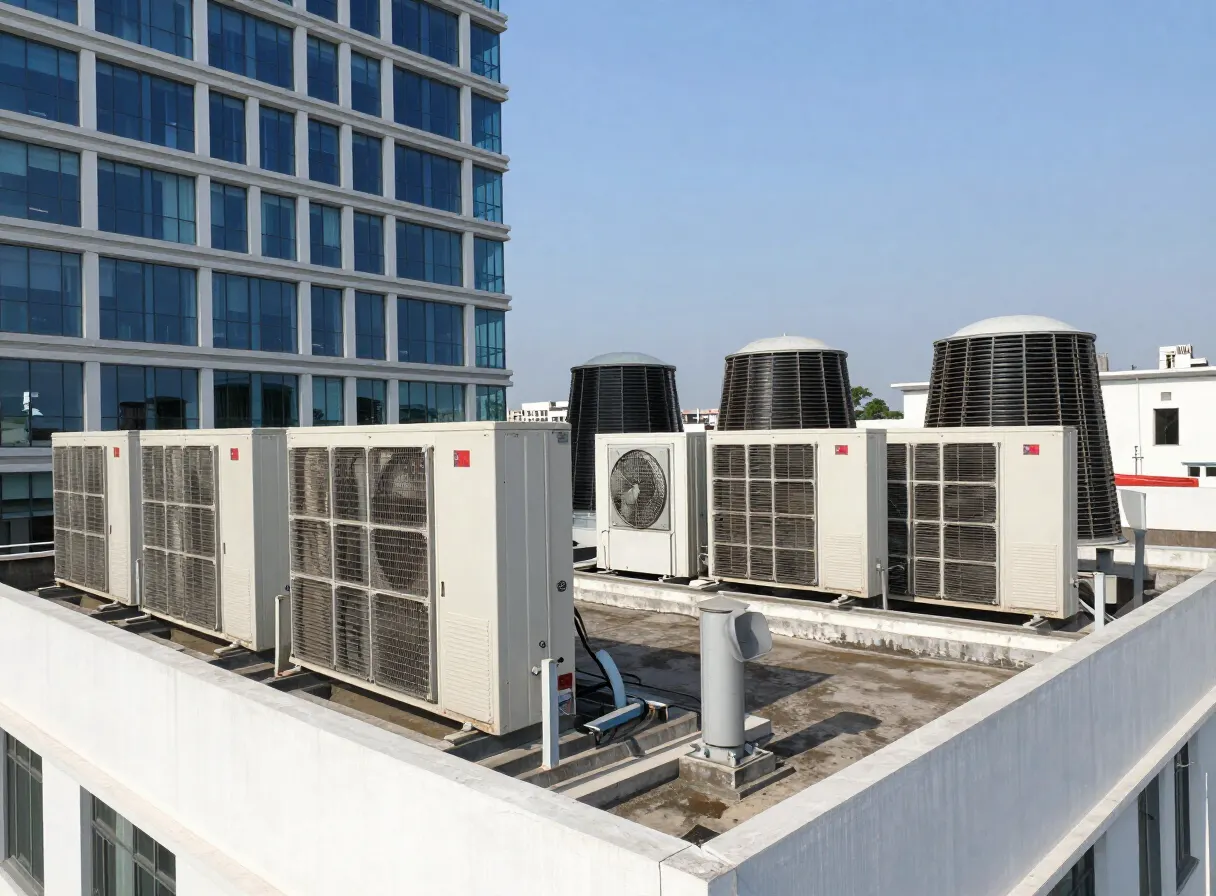
VRF (variable refrigerant flow) moves refrigerant directly from outdoor units to indoor units in each room or zone. One outdoor bank can serve dozens of indoor units, each with its own thermostat. Think of it as a very large, very smart split system.
A chiller plant makes chilled water in a central machine room and pumps it to air handling units and fan coil units across the building. The refrigeration happens in one place; only water and air travel through the building.
Where VRF wins
- Small and mid-size offices with varied occupancy. Compressors modulate and only the zones in use draw cooling - there is no large central plant running to serve a half-empty floor.
- Retrofits. No plant room needed. Outdoor units go on the terrace or facade; refrigerant piping is far easier to route through an occupied building than chilled-water risers and ducts.
- Phased fit-outs. Renting out floors one at a time? VRF lets you commission floor by floor instead of building a plant sized for a building that is half-empty.
- Heat recovery. Modern VRF can heat one zone while cooling another - useful in mixed-exposure buildings through Delhi's mild winters.
- After-hours zones. Server rooms and security offices that run at night do not force a central plant to stay on.
Where a chiller plant wins
- Large, steadily occupied buildings. As total connected load rises and the plant can be centralised, chilled water becomes progressively more attractive - hospitals, malls, big hotels and campuses are its natural territory.
- Long operating hours. Buildings that run at high load all day keep a chiller near its efficiency sweet spot for more hours of the year - that is where the kW/TR advantage shows up on the bill.
- Anything process-related. If the same plant also serves process cooling, a chiller is the only serious option.
- Fresh-air-heavy buildings. Auditoriums, cafeterias and high-ventilation spaces are easier to serve from AHUs on chilled water than from VRF indoor units.
- Long asset life. Chillers are built for decades of service - ASHRAE's service-life database puts a median of 25 years on centrifugal chillers at replacement.
There is no universal tonnage where the answer flips. It depends on load density, how many zones run at once and how the building is occupied - the crossover comes from a proper load calculation and a lifecycle cost comparison for your building, not a rule of thumb.
The India-specific factors people miss
- High-ambient derating. Catalogue capacities are quoted at 35°C, and every manufacturer publishes derating curves showing output falling as the mercury climbs. As one example, Daikin's engineering guidance shows a unit at full rating at 35°C delivering roughly 85-90% of it at 46°C - the exact figure must come from the selected model's performance tables. A system sized off the catalogue number will come up short exactly when the building needs 100% - a June afternoon in Delhi or Ludhiana.
- Water availability. Water-cooled chillers are the efficiency kings, but they need reliable water and a maintained cooling tower. In water-stressed areas, an air-cooled chiller or VRF is the pragmatic pick.
- Monsoon humidity. Latent load in July-August is where undersized systems show up. AHU-based systems with proper reheat handle humidity control more gracefully than direct-expansion units.
- Electricity tariff structure. Commercial tariffs in most states penalise demand spikes. A chiller plant with a soft start and a BMS usually manages peak demand better than a field of VRF condensers starting together.
- Maintenance ecosystem. VRF needs a brand-trained service network - check who actually services the brand in your city before you buy. Chiller plants need an in-house or AMC team comfortable with water chemistry and pumps.
Five questions that settle it
- What is the real cooling load, from a proper heat-load calculation - not a rule of thumb?
- How many hours a year will the building actually run above 70% occupancy?
- Do you have a plant room, water supply and drainage - or the budget to build them?
- Who will maintain it, and what does that contract cost over 10 years?
- What is the total cost of ownership - capital, power, water, maintenance, replacement - over the system's life, not the lowest quote?
If three or more answers point the same way, you have your system. If they split, a hybrid - chiller for base load, VRF for after-hours zones - is common in large mixed-use buildings, and we design those too.
The bottom line
There is no universal winner. VRF is the flexible, low-capex answer for smaller, variably occupied offices and retrofits. A chiller plant is the efficient, long-life answer for large, steady loads. The expensive mistake is picking from a brochure instead of a load calculation.
We design, install and maintain both - VRF systems and chiller plants up to 500 tonnes - across India. If you are weighing the two for a building, talk to our engineers before you commit. Related reading: chiller plant retrofits that pay back and our cooling & AC services.
Want this for your site?
Talk to a Head On Solutions engineer about your HVAC project — fixed pricing, ISHRAE-member crews, written warranty.